How to Read (a guide)
#organizing #HowTo #reading #books #writing
So my friends are often shocked when I tell them I read somewhere in the realm of 50-100 books a year.
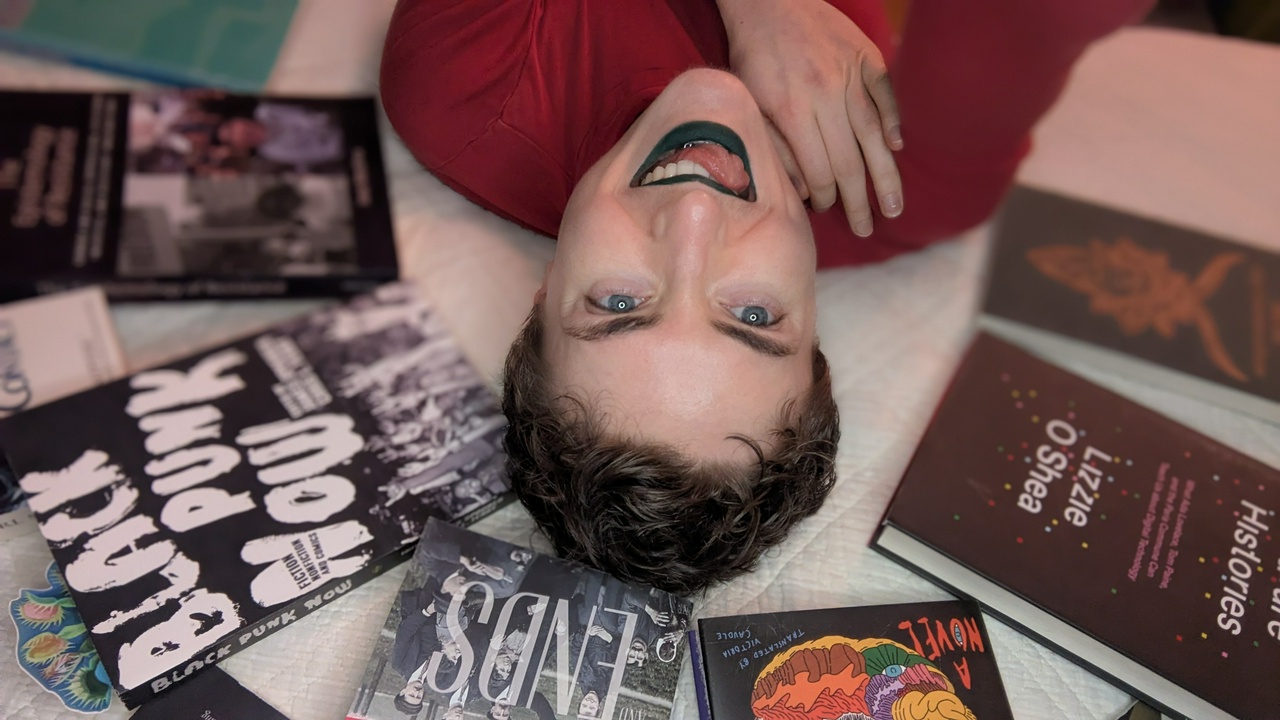
a smattering of a few books I’m currently reading
- So how do I read so much?
- How do I find focus in this chaotic world?
In this short guide, I will share my method for reading any text, but especially challenging ones: academic or domain-specific books and articles.
1. Have a conversation with the book.
Don't assume the author is always right: even if you find their thesis convincing, it doesn't mean all of their arguments are sound. Do you disagree with any of their assertions? Can you think of edge cases where their argument doesn't apply? Did they actually answer the question they set out to? Are they over-generalizing? Or conversely, can you take their argument further? Did they skip over something that feels important?
Who is the author asking me to identify with?
I like to annotate directly in the margins of whatever book I'm reading, either in pencil or using the comment feature of most e-readers. If something really sparks my inspiration, I'll switch to a note app to expand on my thoughts.
2. Put ideas in conversation with each other.
This is a great way of practicing ambivalent thinking. Whatever your background, you have expert knowledge in your own lived experience. You can and should use this as a way of exploring what you're reading. How does this idea apply to my own life? Do I have an experience that reinforces or challenges this idea?
As you read critically, you will gain wider background knowledge, which will unlock further understanding and engagement with what you read in the future.
A few of my idea conversation starters might be: What would Hannah Arendt think about this? Is this an example of queer use? Is this author ignoring the entirety of indigenous philosophy? Is there a dialectic somewhere in here?
3. Read multiple books in parallel.
You will naturally find ideas that play with each other even on disparate topics, helping you cultivate a richer background knowledge, in turn allowing you to understand more complex ideas and writing.
I like to read across a broad range of genres. My current pie chart looks like this:
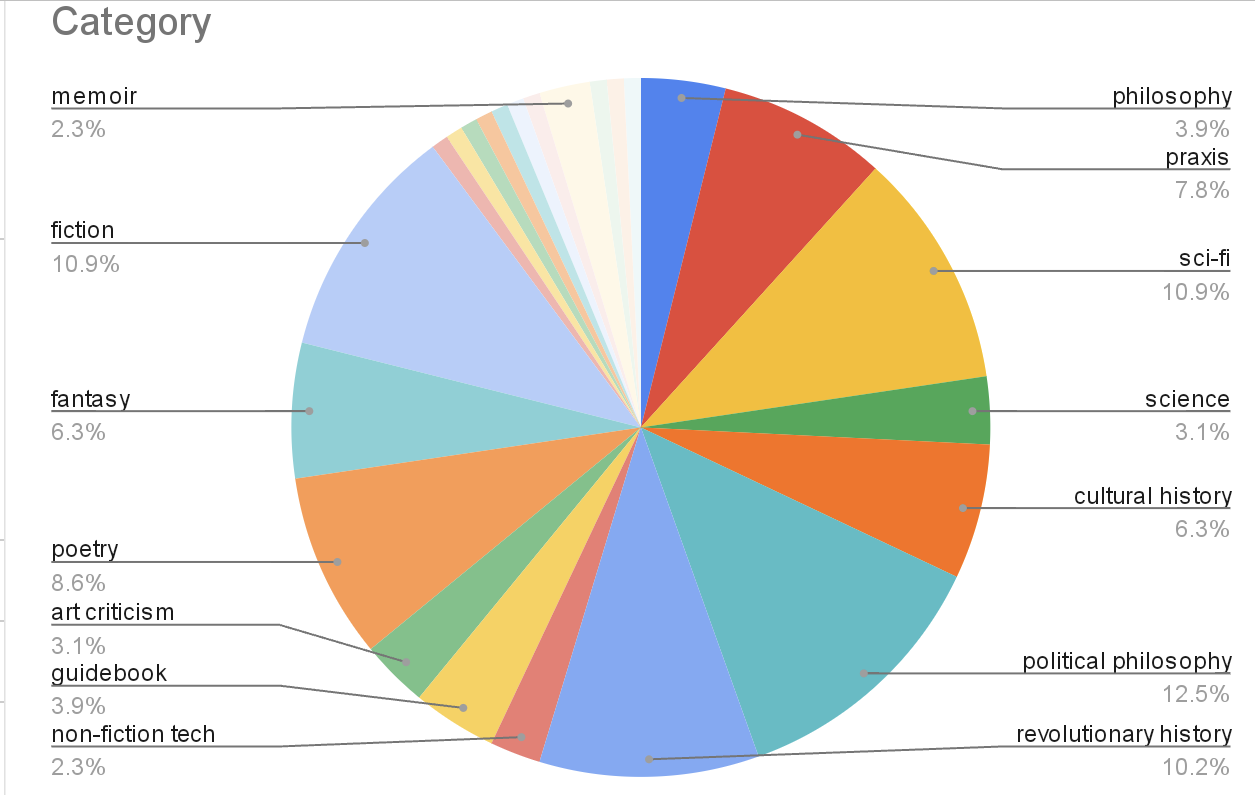
I could write whole essays on why I think each of these are important genres, but ultimately there's a core element of personal taste here. I would humbly suggest experimenting with books outside your usual wheelhouse a couple times a year though.
I also make a strong effort to read diverse authors, namely BIPOC and ABCD (Anyone But Cis Dudes). This isn't to win diversity points or feel good about myself; genuinely the breadth and depth of marginalized knowledge blows me away over and over. These authors just frequently write more interesting, challenging philosophy than most of what gets written from a dominant position in society.
4. Consider using an external memory aid.
I use the Anki app (free on desktop and Android, paid on iOS) to create flashcards for information I know I want to remember, like new words or historical facts! The app automates spaced repetition based on memory research. I spend ~10 minutes a night “studying.” I recommend making your own cards rather than using pre-built decks (which exist on a variety of topics) largely because it forces you to be intentional about what you want to remember.