Free as Folk

writing

I had a wonderful adventure this year at the Seattle International Film Festival (SIFF 2026), mainly because I managed to get so many of my friends to join me!

So I wanted to share a few reflections on my Five Favorite Films from the Festival (mmm what nice alliteration)!

I Love Boosters

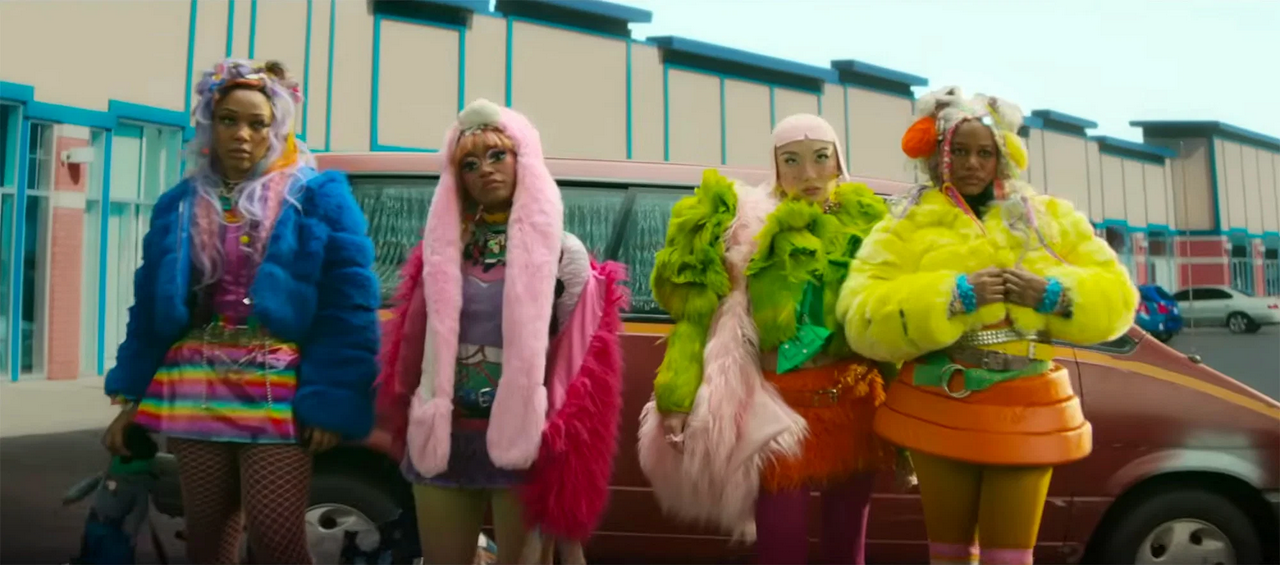
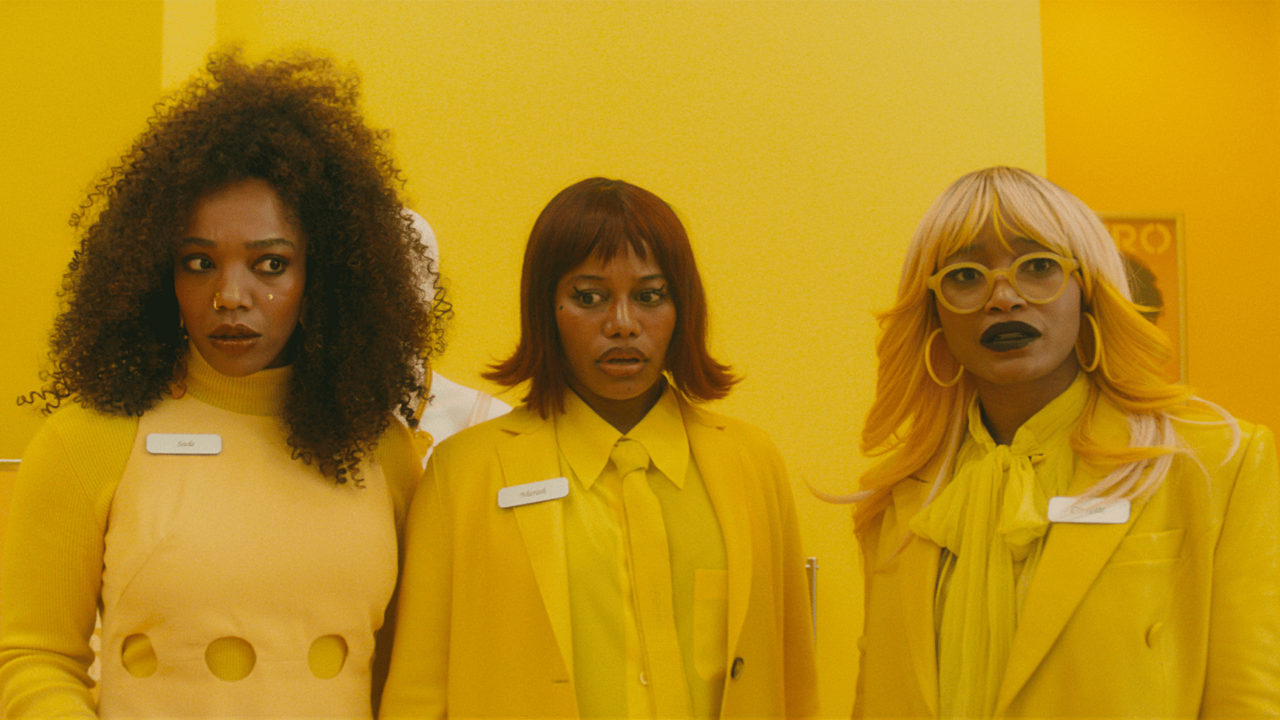
What a delightfully radical way to kick off the festival! This is a film I am dying to make a video essay about. Boots Riley is great. I love when a director just comes out of the gate swinging with a sci-fi MacGuffin to teach us about dialectical materialism and liberatory shoplifting! I Love Boosters, dir. Boots Riley, source: SIFF

The director's Q&A afterward with Boots was also great fun, hearing him talk about going from Oakland-grown communist hip-hop group The Coup (which played its last show at The Crocodile music venue in Seattle) to making movies full-time. Boosters his biggest movie yet, set to open in three times as many theaters as his last film, the critically acclaimed Sorry to Bother You (2018).

I Love Boosters is an absolutely bonkers movie, guaranteed most batsh*t sex scene of the year (possibly of your moviegoing life). Keke Palmer is great, LaKeith Stanfield is great, the costumes are effing INCREDIBLE. Go see it when it comes out May 22nd.

I Love Boosters, dir. Boots Riley, source: FirstShowing

Alt Shorts

I met a sweet kid while waiting in line for this short film collection with my friend. The kid was in the city for a summer internship, but nonetheless wanted to engage with local culture and make connections with other people — a rare thing amongst temporary residents!

Water Sports, dir. Whammy Alcazaren, source: SIFF

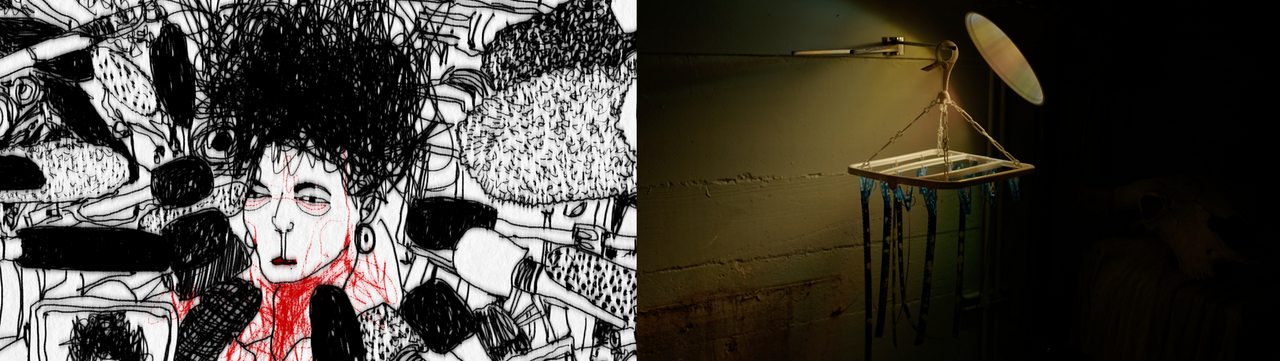
There were a couple standouts in the Alt Shorts compilation: definitely refrigerator hum, by American director Jade Wong, which consisted of the filmmaker's Taiwanese grandmother reviewing her granddaughter's abstract experimental film and thus changing its form as we watch it unfold; and Force Times Displacement, an animated film by Taiwanese director Angel Wu, which (as I interpreted) was an exploration of societal control, creative expression, and work (W = F x d for the physicists in the audience).

Left: Force Times Displacement, dir. Angel Wu, source: SIFF Right: refrigerator hum, dir. Jade Wong, source: SIFF.

I really liked Water Sports, directed by Whammy Alcazaren, a chaotic gay Filipino boys film set in a near-future, climate-ravaged Philippines, but where the youth still manage to create joy and find love.

Another short I vibed with strongly was Materia, directed by Mongolian filmmaker Alisi Telengut, as a series of stop motion photography close-ups of dozens of different types of material (sand, lichen, bark, glass, minerals, crystals, dirt, etc.).

Materia, dir. Alisi Telengut, source SIFF

This film reminded me a Sofya Kovalevskaya quote that I love:

“the poet has only to perceive that which others do not perceive, to look deeper than others look. And the mathematician must do the same thing.”

Kovalevskaya was the first woman to receive a doctorate in mathematics in 1874, but she was perhaps equally passionate about the humanities, poetry and literature, which she considered deeply intertwined.

Assets and Liabilities

I had absolutely no expectations about Zach Weintraub's quirky comedy Assets and Liabilities, only that it looked off-beat and the director was a Tacoma local. Imagine my surprise and delight to discover it was a supernatural landlord horror comedy. Highly recommend (and you may need to look away at a couple points if you have a squeamish stomach)!

Deadline

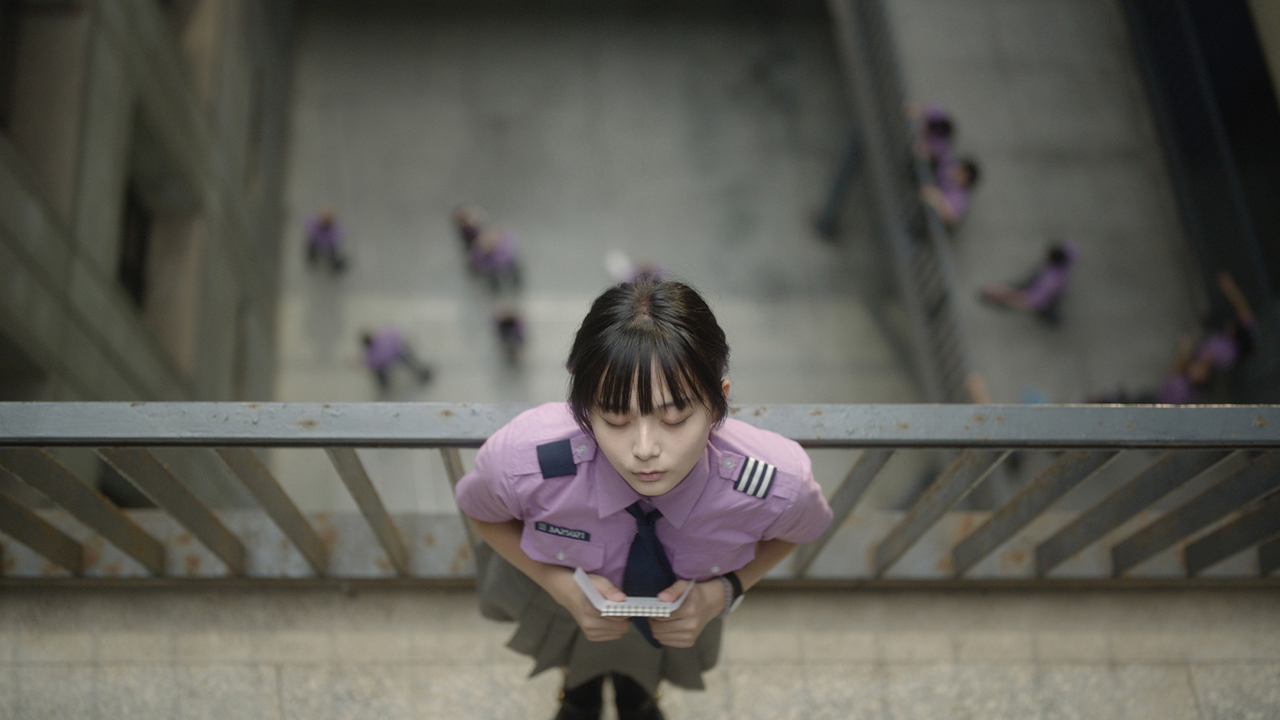
This film, whose literal translation from Mandarin is “Suicide Announcement” is as you might expect, a Very Stressful Movie. Directed by Taiwanese filmmaker Kiwi Chow, Deadline is extremely compelling, and very difficult to watch, especially if you've had any experiences in high-control, hyper-competitive education institutions or struggled with being neurodivergent in schools not designed for you. Big content warning for suicide and self-harm on this one. Deadline, dir. Kiwi Chow, source SIFF.

The film is a very, very important and scathing systemic critique of the education system, explicitly drawing the comparison between schools and prisons.

Fun fact* we learned in the post-screening Q&A with the producer: this film does not appear on the Chinese version of Rotten Tomatoes, because the director has been blacklisted by the CCP for a documentary he made about the Hong Kong protests in 2019, Revolution of our Times. Deadline has been banned from screening in China and (surprisingly) also Hong Kong, so it is depending on international release to make back its budget.

*rather depressing fact

Becoming Human

I have so many thoughts and feelings on this film. It’s one can see myself watching again and again for years to come.

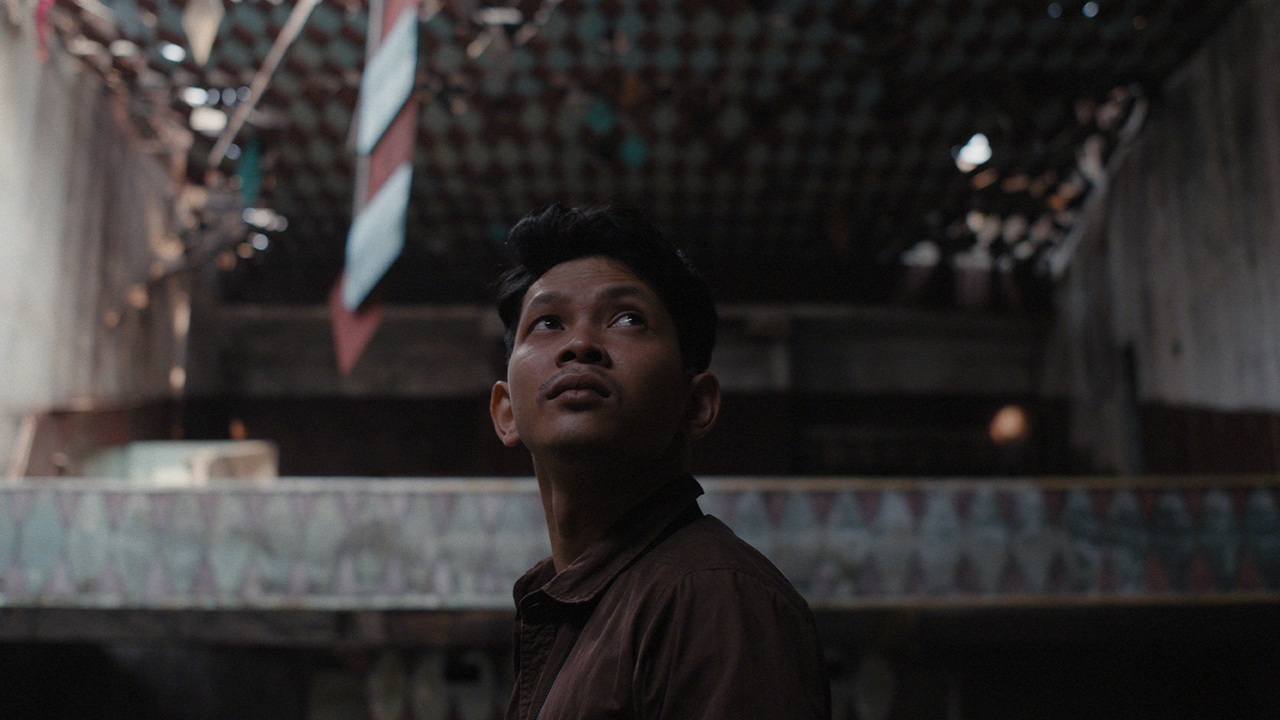
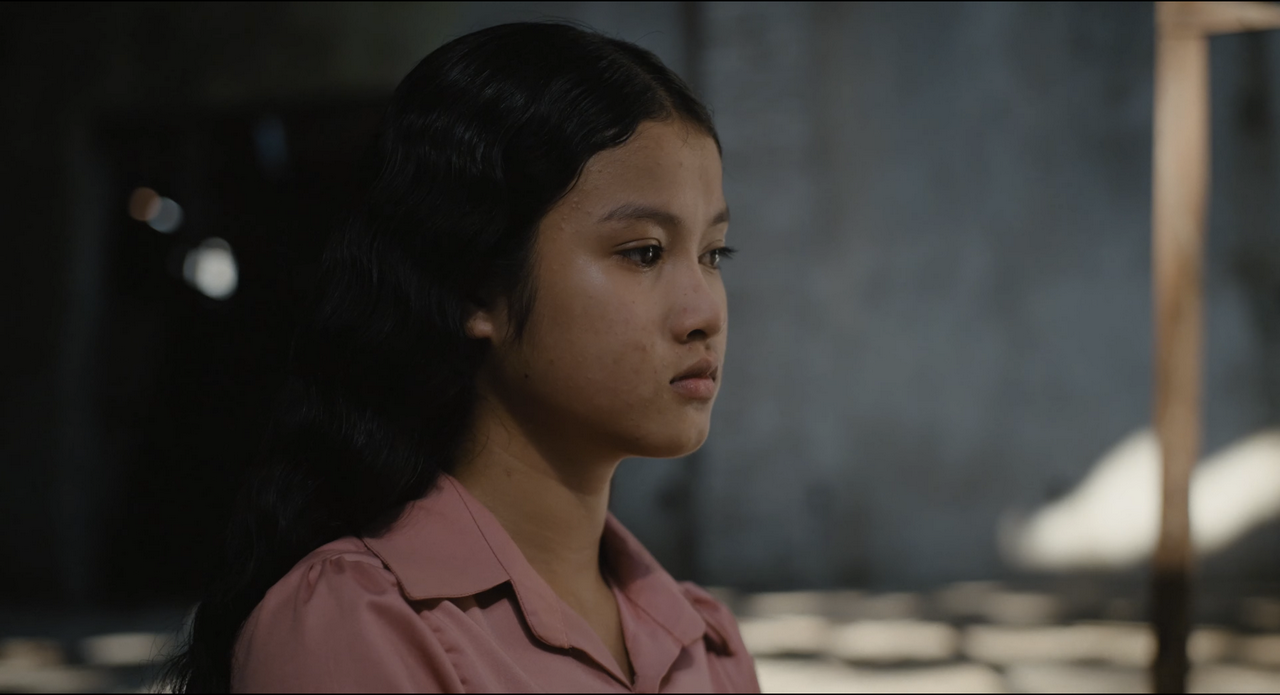
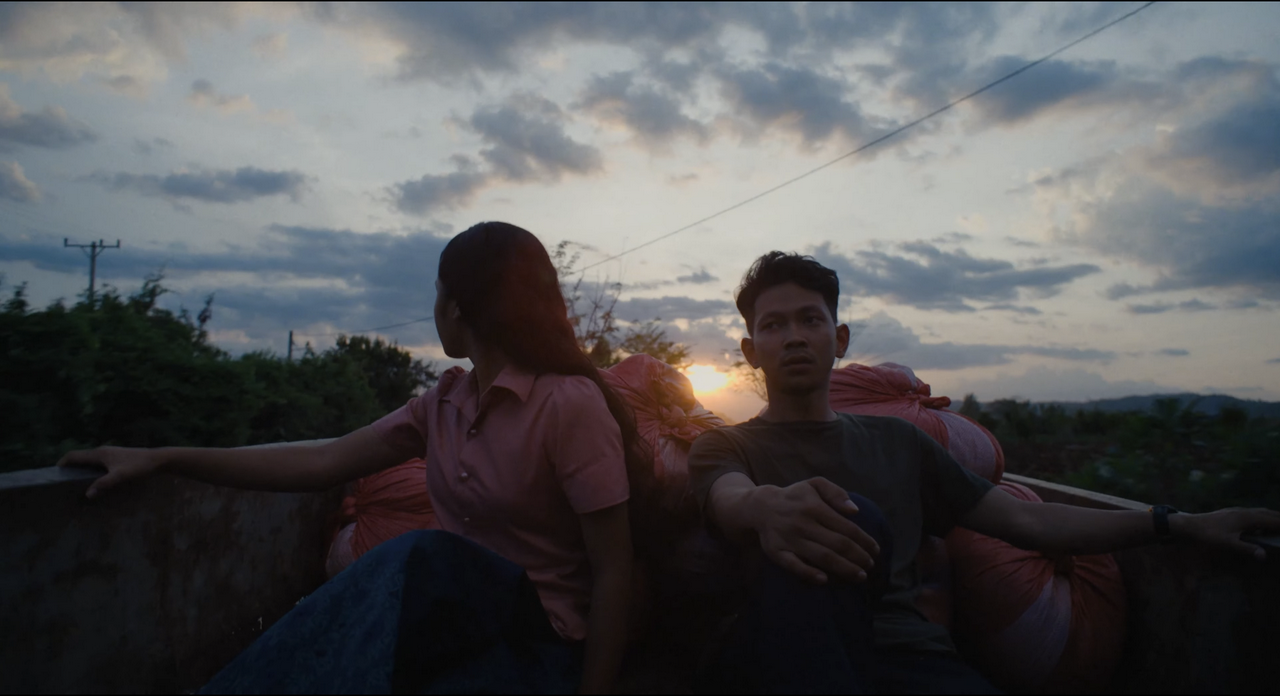
Becoming Human, a stunning directorial debut from filmmaker Polen Ly, is a Cambodian film and about two lonely souls, the guardian spirit of an abandoned cinema about to be demolished and a photo journalist hoping to capture a few fleeting moments there before its destruction.

Becoming Human, dir. Polen Ly, source: SIFF

The film is meditative, beautifully scored and sound designed, melding with the languorous cinematography like a network of entwined roots. The lead actors are both simply excellent in their roles. I love the way Serak Savorn, the young actress playing the guardian spirit, radiates an energy of having lived many decades beyond what her adolescent appearance belies. The quiet sadness and compassion of the photo journalist, played Piseth Chhun, is subtle and deeply tender.

Becoming Human, dir. Polen Ly, actor Serak Savorn

The sweetness that blossoms between these two characters as they reminisce over old movies, attempt to capture a chicken to return to its family, and speak about their homes, past and present, is slow-motion lightning in a bottle. The way their characters and histories unfold as they build trust with one another is so expertly and delicately crafted, and the sensitive nature of these revelations is handled with utmost respect and care.

Becoming Human, dir. Polen Ly

A few of my favorite elements of the film, lingering in my body/mind ever since:

  • The use of 3D spatial audio within our screening theater to make it feel like we are physically present in the dilapidated cinema of the film
  • The film's very unique take on reincarnation, as a form of border control
  • The final shot revealing the protagonist has made a delightful and surprising choice to resist this seemingly inevitable control

I'm incredibly grateful I got in from the standby line at this film! It was totally sold out, every seat filled in our cinema.

Final reflections

I think there are filmmakers who are audio-visual poets. Andrei Tarkovsky (Stalker) and Terrence Malick (The Tree of Life) come to mind, and I would without hesitation place both Materia director Alisi Telengut and Becoming Human director Polen Ly in this category.

Tarkovsky films, clockwise from left: Stalker, Nostalghia, The Sacrifice, and Solaris, source: StudioBinder

Poetry is a mode of expression that I feel speaks to our inner subconscious, not always in literal or logical ways. There are intentional lacunae left by the poet into which our personal understanding blossoms. When film succeeds in this type of poetry, the experience is close to transcendence.

-

#writing #film #SIFF2026 #filmfestival #filmreview #shortfilm #cinema #filmmaking #indiefilm #filmmaker #movies #director #movie #festival #actor #filmmakers #cinematography #filmfest #filmfestivals #films #independentfilm #shortfilms #documentary #filmproduction #shortfilmfestival #producer #art #actress #hollywood #supportindiefilm #womeninfilm #officialselection #Oakland #communism #liberation #editing


This post is Part 3 of a series on social revolutions of the past 30 years — where public consciousness has massively shifted in favor of liberation. My aim is to create space to pause and acknowledge how things have changed in ways that once felt impossible, remind us that things can always be otherwise. It is inspired in part by Rebecca Solnit’s 2016 edition of Hope in the Dark and David Graeber’s 2007 essay “The Shock of Victory.” Feel free to check out part 1 and part 2.

When I was a kid, growing up in the early 2000s USA, the words “communist” and “socialist” were pretty much equivalent to “Satanist.” (okay to be fair my parents may have been a bit more extreme than most: they also thought Yoga was inviting demonic possession and Harry Potter was converting children to witchcraft, but I digress).

But as of 2026, both New York City and Seattle elected self-proclaimed Democratic Socialist mayors: Zohran Mamdani and Katie Wilson, respectively.

Mayor Katie Wilson of Seattle, Mayor Zohran Mamdani of New York City

Although both have faced criticism from Right as well as Left wing sources (either for their espoused views or failure to follow through on them), the fact two major US cities were able to elect openly socialist candidates is a major milestone in public perception.

In this post, I’ll explore a brief history of socialism in US culture and analyze some of the trends over recent years which show movement toward popular awareness of the fundamental problems of Capitalism and increasing willingness to experiment with alternatives.

Class consciousness? Hardly know her.

People who work for a living vs. people who own stuff for a living have very different interests: think about an Amazon warehouse worker vs. Jeff Bezos (or more accurately Andy Jassy, but he doesn’t have his own Bo Burnham song).

I would trace contemporary class consciousness in America in part back to the Occupy Wall Street movement in early 2010s, where de-centralized protestors took over Zucotti park in New York City in opposition to the rule of finance capital over our lives and popularized the slogan “We are the 99%.”

We are the 99% | Ilias Bartolini | Flickr

protestors on the steps of London Stock Exchange in 2011, source: Ilias Bartolini

Protestors were bringing to light the fact that, at the time, the top 1% of the population owned 43% of wealth. Since then, things have only gotten worse, with just 3 people owning more wealth than the bottom half of the country, and there is widespread despair of class mobility.

undefined

chart source: wikipedia contributor RCraig09 based on World Inequality Database

Speaking of shifting perceptions of the ruling class, we can look at the public reaction to alleged assassination of the CEO of United Healthcare, which makes hundreds of billions annually off denied insurance claims, by a certain Italian-American individual.

Federal prosecutors to seek death penalty for accused CEO killer Luigi ...

Luigi Mangione in court in 2025, source: Steven Hirsch/New York Post via AP

The popularity of the alleged assassin, dubbed by Forbes as a “social media folk hero,” certainly demonstrated a massive shift in consciousness away from a world where billionaires and CEOs were seen as untouchable, aspirational figures to a world where the actions of individual, determined people can reach them.

It’s debatable whether one can call this celebration of alleged vigilante justice by hot guys “class consciousness” per se, but it is certainly a shift in public perception —against the ruling class, which shocked many news outlets at the time.

If we look beyond individual actions though, we can see shifts toward more large-scale collective organizing.

Our rising labor movement

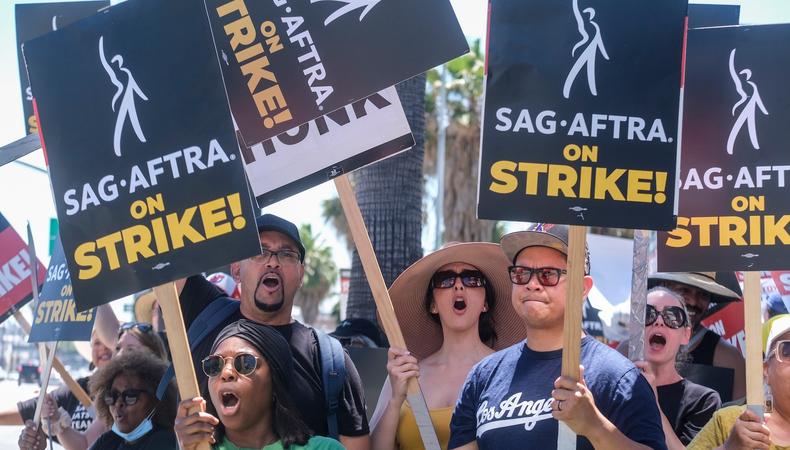
Perhaps the most public recent labor rights struggle is the 2023 SAG-AFTRA strike, which stretched on for four months and focused on putting protections in place to defend creative workers against exploitation and replacement by AI.
Article Image

SAG-AFTRA strikers on the picket line in Los Angeles in 2023, source: Ringo Chiu/Shutterstock

Although labor union membership been sharply falling since the 1980s (mainly due to shipping US manufacturing jobs overseas and prolonged repression of organizing by capitalists and the government), the year 2025 marked a 16 year high in union membership, increasing from 14.2 million to 14.7 million people compared to 2024.

That’s an extra 500,000 people who joined unions last year. Public approval of unions is at 70%, which is the highest it’s been since the 1960s. Labor organizing has long been seen by leftists as a crucial part of any revolutionary strategy, with the General Strike being considered “the most powerful weapon of the working class” by the International Workers of the World (IWW, sometimes called “the wobblies”).

Thinking of militant unions as part of a broader strategy to build socialism, we can look to the past to see how labor unions have fought for and won serious victories.

Why was socialism ever unpopular?

If you ignore the half-century long conflation of communism and socialism with authoritarianism, it seems like a pretty easy sell (capitalist pun intended): who wouldn’t want to live in a society where basic needs of living are covered? Where everyone gets what they need — housing, healthcare, and public transportation — and where we get to directly control our own workplaces and decide what happens in our communities?

People generally don’t like feeling exploited or spending their lives under the thumb of one unaccountable boss after another. Most people recognized this in the early 20th century and were prepared to do something drastic about it.

Jumping back in time to 1912, dues-paying members of the US Socialist Party reached a peak of 113,000, while a massive series of worldwide strikes and militant labor actions forced governments and capitalists into compromises that led to the eight-hour workday and many of what are commonly called “New Deal Era Reforms” (which is a term that conveniently leaves out the labor struggle that was fought to win them).
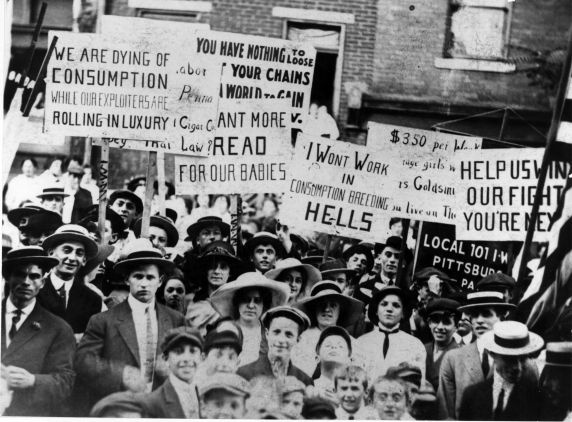
Tobacco Strike, Pittsburgh, Pennsylvania, 1910s, source: Walter P. Reuther Library

These reforms no doubt improved lives, particularly in establishing the US social safety net during the FDR era, and expanding to include Medicare during Lyndon B. Johnson’s “Great Society” era. (and which both parties have been gradually eroding since 1970).

But as positive as they were, these Democratic Socialist reforms of the New Deal represented a significant compromise against full-worker democracy and overthrow of the government, as was carried out in the 1917 Russian Revolution.

Although the USSR eventually descended into authoritarianism, the initial February Revolution was led by village soviets” (meaning council or assembly in Russian): hundreds of autonomous, grassroots community assemblies who revolted against the Tzar to redistribute land and self-manage their own communities.

The Bolsheviks seized power later that year, claiming to represent the soviets and co-opting their slogan “all power to the soviets,” then proceeding to systematically squash them, suppressing hundreds of peasant revolts against the Bolshevik government which continued well into the 1920s.
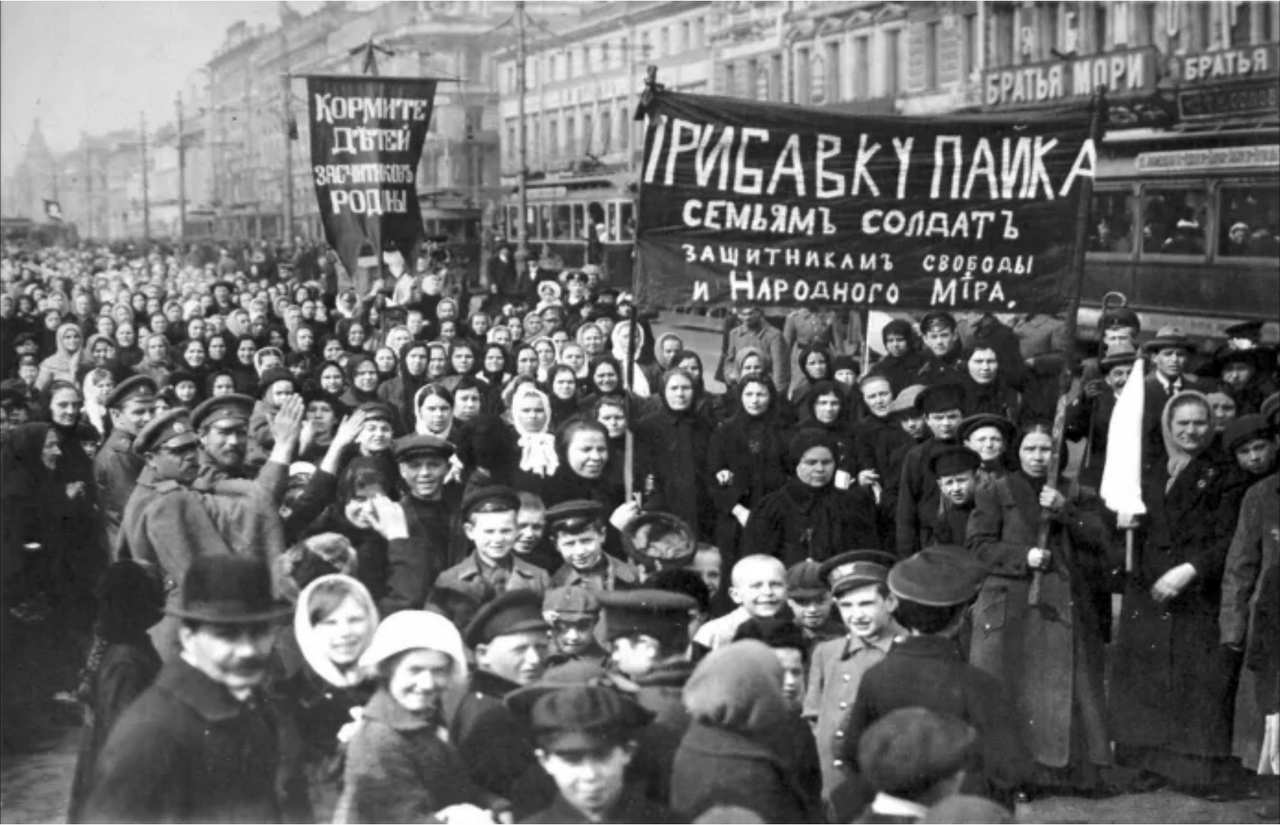
Workers strike in 1917 on the first day of Russia's February Revolution in the capital Petrograd, now known as St Petersburg. source: Getty Images.

The US government and its capitalists really didn’t want to risk a repeat of that.

The Spectre of Communism haunted many Western powers over the rest of the 20th century. Socialism as an ideological position has been strongly repressed in US culture since at least the 1950s, particularly with the COINTELPRO, where the FBI infiltrated and intentionally sowed distrust and disorganization in US Leftist organizations, sometimes engaging in agent-provacateur methods to entrap organizers and discredit groups centered on grassroots social change as violent radicals.

Or other times they just straight up murdered revolutionaries in their beds.

What really frightens the ruling class

Fred Hampton speaks at a rally in Chicago's Grant Park in September 1969. source: Chicago Tribune/Tribune News Service via Getty Images

Perhaps the most famous FBI assassination (that is, if you skip over the speculation that the FBI killed Martin Luther King, Jr.) is that of Fred Hampton, Chairman of the Chicago Black Panther Party — who was murdered at 21 years old, asleep next to his eight-month-pregnant fiancée, along with a friend who was attempting self-defense.

At the time, Fred Hampton was spearheading the multi-ethnic, multi-cultural Rainbow Coalition — which included recruiting from Black and brown faith communities, white Appalachians, labor unions, and Puerto Rican street organizations like the Young Lords, altogether aiming to demonstrate how much stronger we all are when we unite across difference.

I think often of my favorite Audre Lorde quote, from her famous The Master’s Tools Will Never Dismantle the Master’s House speech:

Within the interdependence of mutual (nondominant) differences lies that security which enables us to descend into the chaos of knowledge and return with true visions of our future, along with the concomitant power to effect those changes which can bring that future in being.
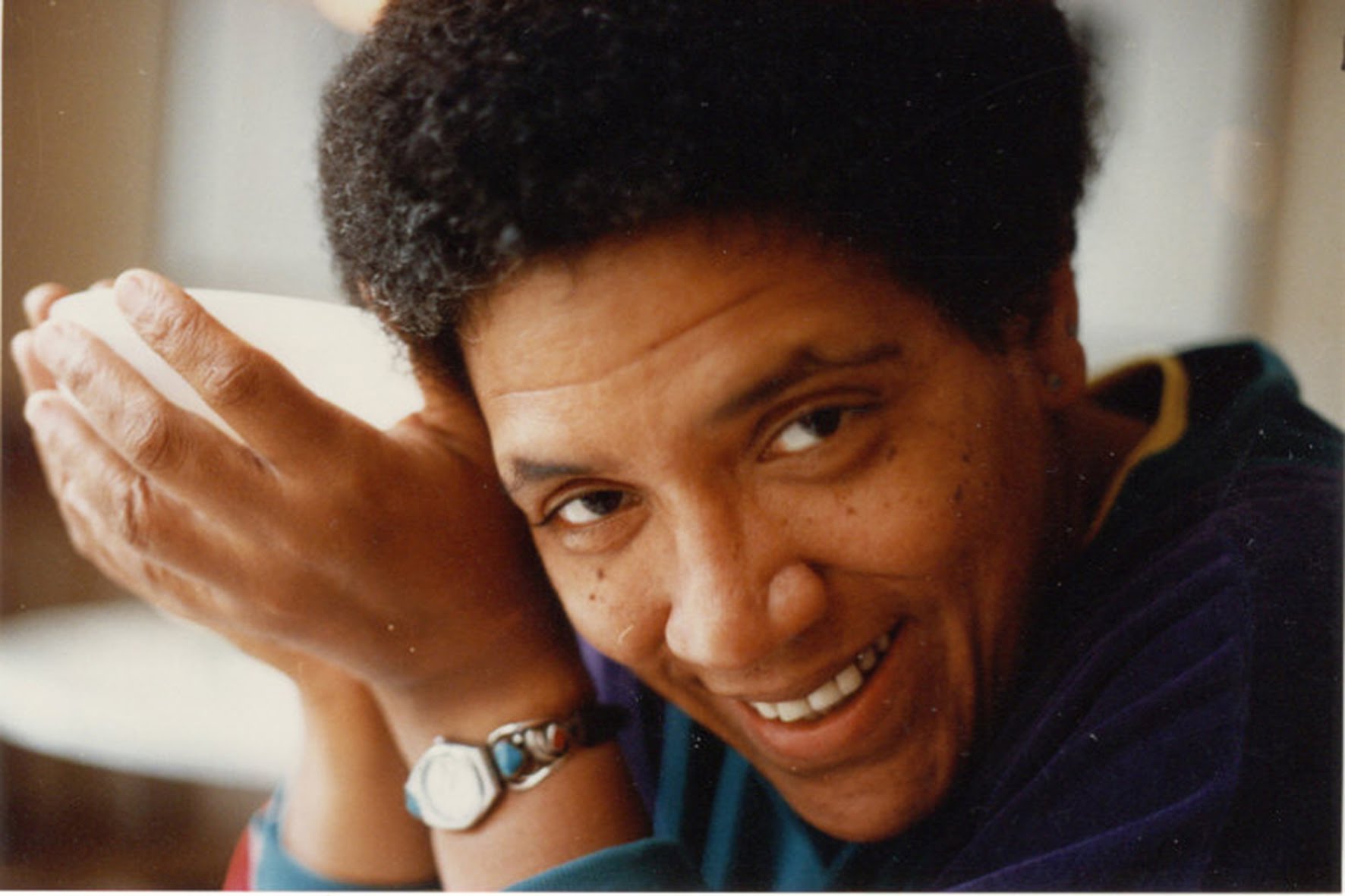
audre lorde 1 - La Crítica

Audre Lorde, photo source: La Critica

Together, when we reach across difference, we can find a shared power in the gaps: an emergent property of coming together with openness and integrity.

The Backlash

The backlash against class consciousness — against the awareness of the obvious injustice of the economic order — has historically been distraction and misdirection. Lately you have the rise of “hustle and grind culture,” where the global problem of capitalist exploitation is to be solved by just “getting on your grindset:” working yourself harder than some hypothetical other who is presumably less deserving.

Despite 70% of Americans approving of labor unions, only ~10% of US workers are unionized. This is due to a deeply unfriendly regulatory environment, including gig work replacing much full-time employment, “bossware” and algorithmically driven labor management, and the large-scale shift away from traditional workplaces (like an office or factory floor), where workers could historically spend time with one another in person, making it much harder today to form trust and a sense of solidarity.

A whole ecosystem of hustle culture grifters has grown up to try to convince people caught in this trap that they have the secret solution that can get their followers out of this rigged game. Many such grifters, like accused international sex criminal Andrew Tate, appropriate the metaphor of “escaping the Matrix” as a way to describe getting yourself out of a position of exploitation… so you can become the guy stepping on the other guy’s throat.

The Matrix (1999) - Posters — The Movie Database (TMDB)

It’s Deeply ironic to see the allegory of The Matrix accurately clocked as a depiction of Global Capitalism, but to envision not the destruction of the Matrix or building something beyond it, but simply becoming the oppressor yourself.

The gig economy has positioned itself in terms of “being your own boss,” we have mass proliferation of get rich quick schemes like NFTs and now AI, and above all the sheer overwhelming distraction of the internet, with hundreds of thousands of accounts trying to convince you they have the solution to your individual problem. Some of these solutions are relatively harmless (if pseudo-scientific), like those peddled by the manifestation and crystals crowd; but others are the virulently corrosive, like QAnon.

The Mirror World

There’s a famous saying in leftist circles that “anti-semitism is the socialism of fools.”

Essentially, what it means is this: many people are able to correctly identify that the world is run by a small number of elites with fundamentally unjust economic control and exploitation of everyone else. Buuuuttt, there is a large number of people who will then incorrectly identify the cause of this state of affairs as “THe JEwS!” — with many uncountable dog-whistles like “George Soros” or mentions of “shekels changing changes.”

Many other forms of scapegoating have analogous roles in distracting from the structural causes of harm: blaming immigrants for economic crises, Black mothers for crime, trans people for harm to children, Iran for a war the US started, and on and on.

In her excellent 2023 book Doppelganger: A trip into the Mirror World, writer and activist Naomi Klein explores the contours of this alternate reality which many right-wing people seem to live in, where they come right up to the edge of an accurate systemic critique, but then veer off into moon-logic and end up blaming a marginalized group for problems caused by the ruling class and centuries-in-the-making structures of global oppression.
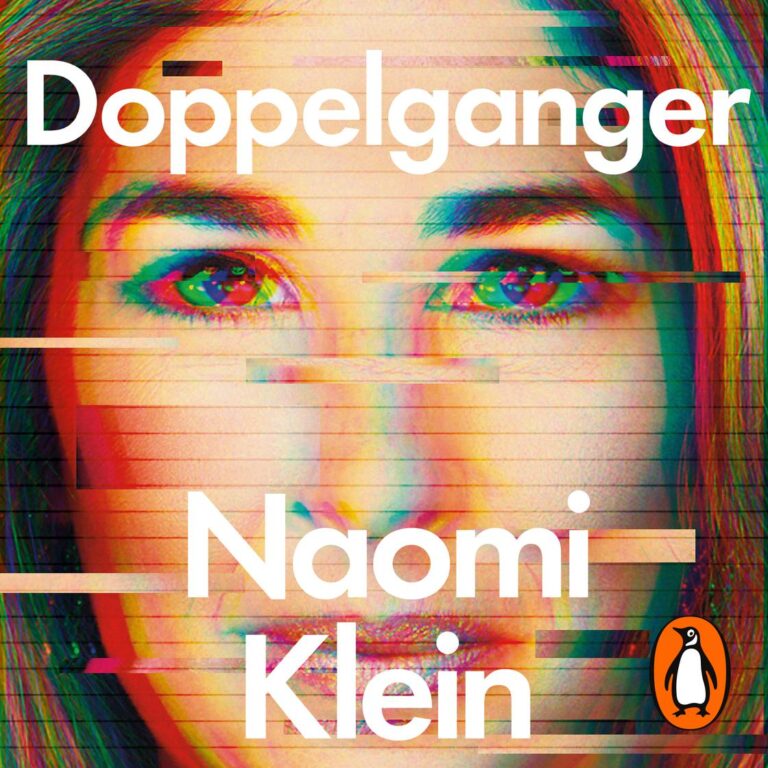
On DOPPELGANGER: A TRIP INTO THE MIRROR WORLD by Naomi Klein | Jonathan ...

Who’s getting desperate…

Despite the very real fascism raging in the US and many other places worldwide, it seems to me that the ruling class hasn’t been this desperate in a long time.

Trying to recruit new ICE agents is reportedly quite difficult with public disapproval at an all-time high — even given just how low they’ve made the bar. The Atlantic reported that the administration reduced the ICE training period from “five months to 47 days last summer—because Trump is the 47th president.... Now it’s 42 days.” Obviously this desperation for recruits, no matter how incompetent, means increased danger of cowboy types doing harm to the public, but it also increases the likelihood of ICE bungling their own operations due to inexperience.

The Bannon-Trump strategy of “Flooding the Zone” — overwhelming media with ceaseless, outrageous content so no one knows what to focus on and despair of ever having an impact — is not a strategy you deploy when you have an actual plan to solve real problems. They are just trying to keep people distracted enough, long enough, to slip their corporate buddies a few extra dollars and give their oil bedfellows time to squeeze the last few drops out of the ecosystem before everything is on fire.

But even in the face of this horror are signs of growing grassroots, community power.

What is on the horizon

Along with recent increases in union membership and plans for a possible General Strike in 2028 spearheaded by the United Auto Workers, there has also been a 34% rise in worker cooperatives in the US since 2020, more than doubling their workforce!

Cooperative economics have long been proposed as a way to establish dual power: spaces of greater autonomy and freedom which coexist in the cracks of capitalism and the State, where we can practice the kind of relations we want to have with each other right now.
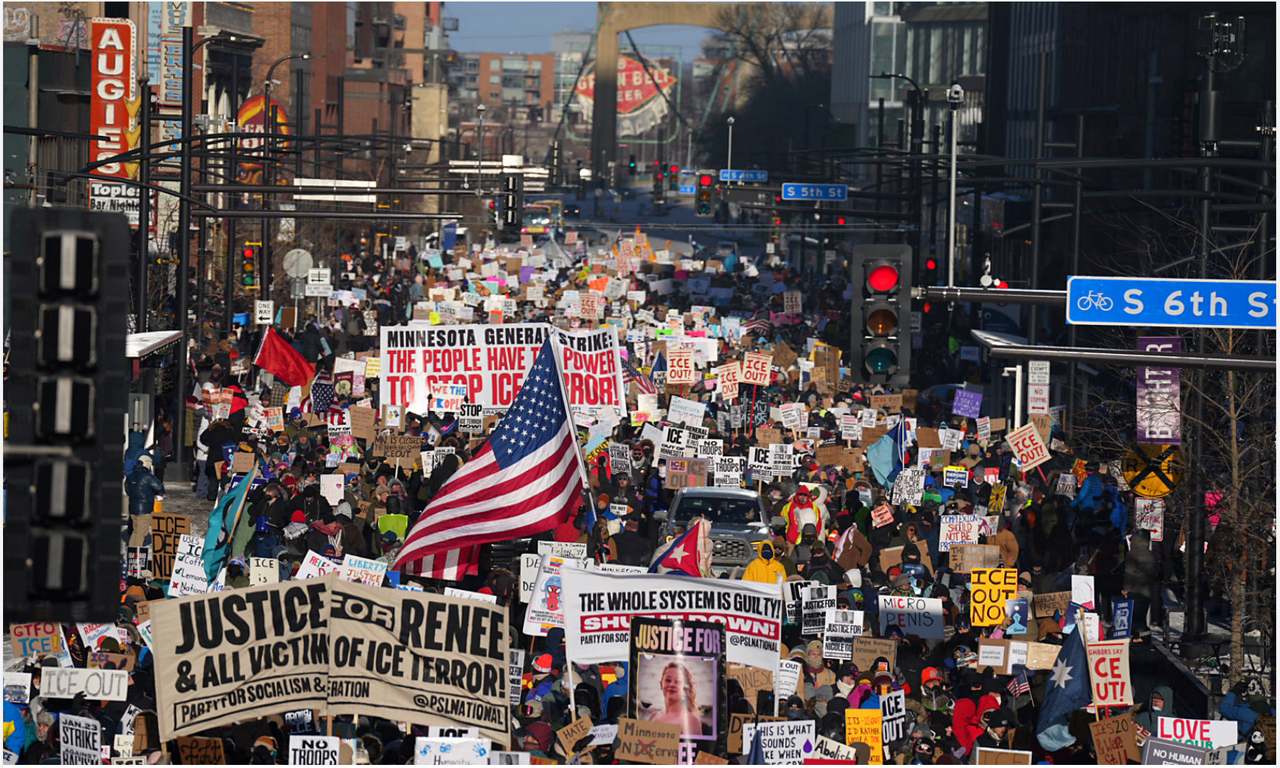
Minnesota anti-ICE protests, source: Coop News

On the housing front, more people are joining tenants unions, and more people are realizing housing is a human right and shouldn’t be left to the whims of the market, that unhoused people are not the cause of homelessness. Neighbor unions are digging into the radical potential of place-based community organizing.

Even less explicitly radical trends like quiet quitting” and “I don’t dream of labor” discourse show people understanding their interests are not the same as their bosses’ interests, and taking steps to reclaim autonomy.

Where will the next developments in anti-capitalist organizing bloom? Radical labor unions? Solidarity Cooperatives? Workplace occupations? Neighbor unions?

Let’s try em all and see what sticks.

Suggested reading

  • Agents of Repression: The FBI's Secret Wars Against the Black Panther Party and the American Indian Movement, by Ward Churchilland Jim Vander Wall
  • Fight Like Hell: The Untold History of American Labor, by Kim Kelly
  • Solidarity Economics: Why Mutuality and Movements Matter, by Chris Benner and Manuel Pastor

#socialrevolution #writing #revolution #education #essay #socialism #communism #capitalism #DSA #seattle #NYC #Mamdani #coops #NaomiKlein #AudreLorde #anarchism #wearethe99percent #occupy #SAGAFTRAStrike #generalstrike #neighborunion #laborunion #strike #IWW #quietquitting #idontdreamoflabor #COINTELPRO #solidarity #community #history #radicalhistory #TheMatrix #BlackPanthers #BPP #FredHampton #RainbowCoalition

This post is Part 2 of a series on social revolutions of the past 30 years — where public consciousness has massively shifted in favor of liberation. My aim is to create space to pause and acknowledge how things have changed in ways that once felt impossible, remind us that things can always be otherwise. It is inspired in part by Rebecca Solnit’s 2016 edition of Hope in the Dark and David Graeber’s 2007 essay “The Shock of Victory.” Feel free to check out part 1.

I remember when I first heard the phase “abolish the police” back in 2020, I thought it was pretty much fantasy. I had grown up on copaganda movies and TV and immediately thought “but who’s going to catch all the murderers and rapists?!”

Once I had done some digging and learned oh, actually cops are NOT catching many murderers or rapists, my next logical question was, “okay so what’s your alternative?”

In this blog post, I will explore the evolution of mainstream ideas about policing and how we’ve shifted our focus away from reform efforts (which have failed time and again), to building a multi-faceted constellation of alternatives to support human flourishing at all levels of society — instead of punishing people and locking them up which, beyond being inhumane, simply does not stop crime.

Are Prisons Obsolete?: Angela Y. Davis: 9798212320382: Amazon.com: Books

Are Prisons Obsolete? (2003) by the luminary Angela Y. Davis.

Despite mainstream liberals like former President Obama decrying it as too radical, the slogan Defund the Police” brought what was basically a fringe position before the #BlackLivesMatter uprisings of 2020 to a topic of discussion on all major news outlets. You could see it on signs at protests, graffiti on walls, banners on buildings, posters in coffee shops, and chalk on the sidewalks.

This massive spotlight on anti-police and prison movements also influenced mainstream film and TV, with a 2021 article claiming that 127 episodes of television had addressed the Movement for Black Lives onscreen just that year, with popular “progressive” cop shows like Brooklyn 99 doing entire arcs responding to the uprisings, culminating in beloved characters leaving the fictionalized NY police force.

Brooklyn Nine-Nine Poster | Brooklyn nine nine, Comedy tv series, Brooklyn

No matter how controversial the slogan may have been in 2020, “Defund the Police” brought what was formerly a radical activist position into the mainstream discourse. Even those who disliked the slogan admitted that they were for shifting funding away from law enforcement and toward education, social services, arts, parks, and other quality of life investments in public infrastructure.

The average moderate today is far more aware that social and economic issues are often the source of crime, that prisons reproduce criminals, that the history of modern policing lies in slave patrols and protecting private property — NOT in bringing murderers to justice.

Today, “abolish ICE” is a rallying cry across even formerly moderate groups, like Indivisible, which co-organizes the mass rally #NoKings protests.

Photos: Demonstrators at the ICE Facility in south Portland after the ...

Protestors holding up anti-ICE signs at Portland Protest in 2025, source: Daily Emerald

This is genuinely worth celebrating, because as much as it might feel like the scale of the 2020 BLM protests came out of nowhere, there is a long and rarely-told history of abolitionist organizing from at least 1970s with Black Feminists and the “Free Angela Davis campaign” — but we can connect it much farther back to the lineage of abolitionist organizing against slavery in the 1800s with formerly enslaved Black activists and intellectuals like Frederick Douglass and Sojourner Truth.

The Backlash

As always, when groups succeed in organizing for liberation or achieving greater visibility, there is a reactionary backlash of people and institutions who are afraid of freedom and feel threatened by marginalized people gaining power and autonomy. Far from defunding the police, since 2020 a majority of states and cities have increased their police budgets and increased police militarization.

Home - Black Freedom Movements in American History - Library Research ...

Police in riot gear facing down a line of protestors. source: Indiana University Library

In my previous entry of this series, I talked about the backlash against revisionist history projects like the 1619 Project, which was intended to provide a long overdue counter-narrative to the glorifying mythology most Americans are taught about the founding of our country. I also outlined the escalating trend of charging non-violent activists with terrorism. The anti-critical race theory (CRT) culture war also emerges out of the same milieu as anti-BLM backlash.

But despite all the effort Republicans put into misinformation and fearmongering, nowadays, you’ll hear even previously moderate progressives say ACAB, particularly with the escalation in violence against even non-violent white citizens like Alex Pretti and Renee Nicole Good.

Today, even older white moderates are, for the first time, identifying law enforcement as a source of danger and not protection. In the past, this type of violence has largely been confined to borders, prisons, concentration camps, and BIPOC communities more generally, but with the extreme escalation of Trump 2.0’s ICE, we are seeing plainly the oft-quoted words:

The truth is, no one of us can be free until everybody is free.

-Maya Angelou

What I see as the biggest risk in the current phase of mass participation, rally-based politics which center narrowly on abolishing ICE and removing Donald Trump from office, is that framing the problem as confined to these issues discourages deeper questioning of the structures and institutions which are foundational to America.

My biggest fear

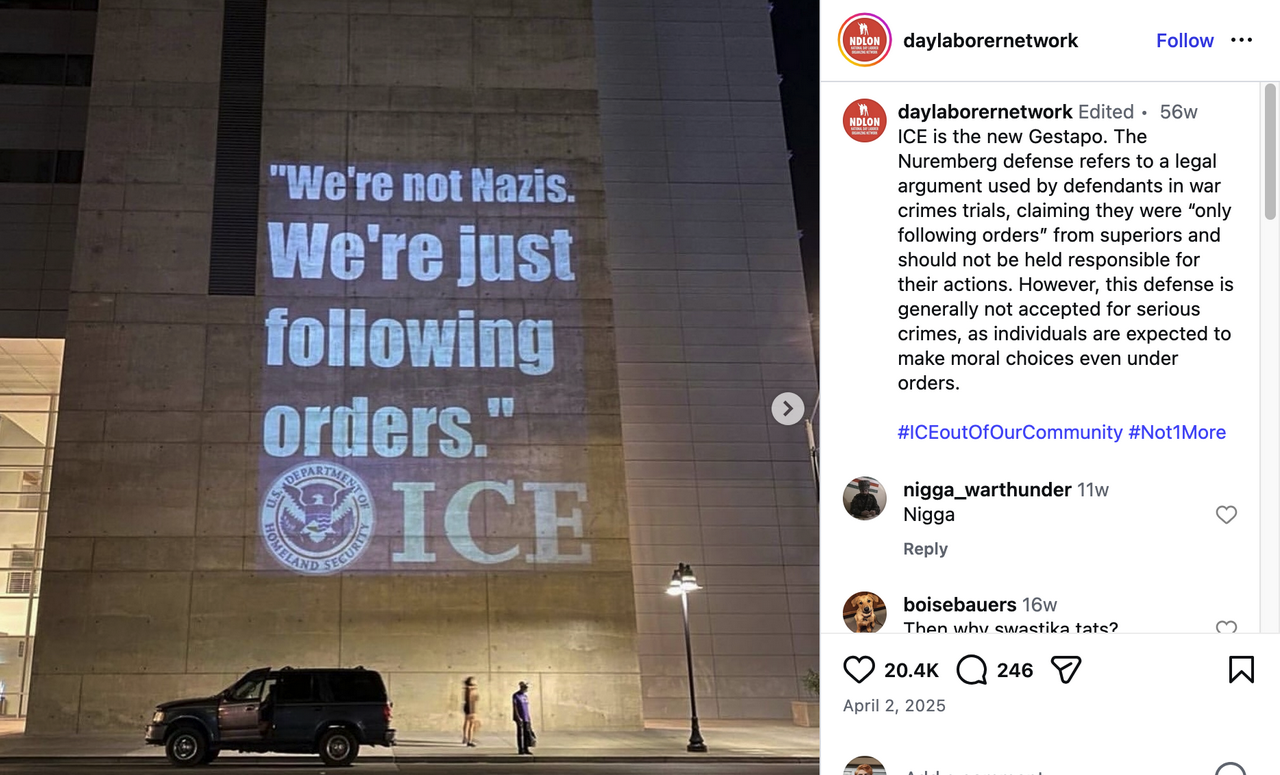
Calling ICE “the gestapo” (as I myself have in a video essay, analyzing the ties between a certain yogurt CEO and the Department of Homeland Security) is accurate in a sense of drawing a necessary comparison between the contemporary fascism of the Christian Nationalist regime of the US to that of Nazi Germany; on the other hand, calling ICE the gestapo conveniently distances ICE from the broader institution of US policing, making it seem like a complete and unprecedented aberration, when in reality, this is an expansion of the practices baked into America from its very founding by slave-owners who enjoyed waxing poetic about Liberty — as uncomfortable as that makes many of us (and it’s clear it makes Republicans VERY uncomfortable).

The influential Brazilian educator and theorist Paolo Freire refers to this type of cultural consciousness — where people are aware there are problems in society, but tend to view those problems quite narrowly — as Naive Transitivity, which he defines:

An over-simplification of problems; by a nostalgia for the past; by underestimation of the common man; by a strong tendency to gregariousness; by a lack of interest in investigation, accompanied by an accentuated taste for fanciful explanations; by fragility of argument; by a strongly emotional style; by the practice of polemics rather than dialogue; by magical explanations - Freire, Education for Critical Consciousness (1997): p. 18

When I see bumper stickers saying “No one is above the Law” or “Impeach Trump” or “Veto the Cheeto” — and the basic “No Kings Since 1776,” it’s clear that these people are invoking rose-colored ideas of American Democracy, simplistic appeals to a more polite and professional era of politics, and a nostalgia for the American Revolution.

Thousands of anti-Trump protestors pack 'No Kings' protest outside ...

Slogans that center on a single action, imagining that “the problem” would be solved if we simply got rid of Trump or got Congress to veto his laws are oversimplifications of structural problems. Many of Trump’s actions are carried out by Executive Order, far easier to wield than a 2/3 supermajority in a body of government engineered to be disconnected from democratic oversight the very existence of the Senate represents founders’ fears that too much democratic control would be dangerous! The system is not broken; it is functioning as intended, keeping and consolidating power in the hands of the already powerful.

My biggest hope

Putting aside my skepticism that the large number of people attending anti-Trump rallies are really questioning the roots of American imperialism or white supremacy, I am seeing a tremendously inspiring trend emerging in bottom-up democracy: the rise of Neighbor Unions — a relatively novel form of autonomous place-based organizing. The Institute for Social Ecology defines them:

an organization dedicated to building a community of solidarity at the scale of a neighborhood, and empowering that community to strive toward self-governance. Through welcoming events, consistent outreach, relationship building, and practical projects, organizers work to help people overcome their sense of isolation and powerlessness by getting to know their neighbors, supporting each other in concrete ways, and participating directly in the process of reshaping local life for the common good.

Neighbor Unions emerge from Murray Bookchin’s work on Social Ecology, anarchism, direct democracy self-management experiments like the Rojava Revolution, indigenous consensus-based governance practices going back thousands of years, and the experiences of community assemblies in the #Occupy Movement. Neighbor Unions are fundamentally grassroots and broad, not locked into insular sectarian debates or stuck begging elected leaders to solve problems.

Campaign cover image for Neighbor Union Organizing Training - 2026 Cascadia Cohort

source: Institute for Social Ecology

Neighbor Unions are organizing locally to take care of our neighbors and build confidence in our abilities to self-manage and take direct action in our communities.

That includes restorative and transformative justice, like that practiced by women-led community mediators in Rojava, advocacy and prison diversion programs like the Restorative Justice Initiative in NYC, the effective but ultimately underfunded experiment in 911 crisis call diversion CAHOOTS in Eugene, OR, and many other initiatives in the U.S. and around the world.

It’s not easy work to replace a system of structural policing and incarceration, but the very first step toward it is building trust with our local community and learning how to take care of each other.

Suggested Reads

#writing #revolution #stopcopcity #blm #abolition #education #essay #defundthepolice #abolishthepolice #abolishICE #prisonabolition #prison #prisonlife #prisonbreakedit #freethemall #criminaljustice #endmassincarceration #criminaldefense #criminaldefenselawyer #accesstojustice #prisonart #notguilty #lawyers #endcashbail #court #wrongfulconvictions #endthedeathpenalty #criminaldefenseattorney #restorativejustice #transformativejustice


This post is Part 1 of a series on social revolutions of the past 30 years — examples where public consciousness has massively shifted in favor of liberation. My aim is to create space to pause and acknowledge how things have changed in ways that once felt impossible, remind us that things can always be otherwise. It is inspired in part by Rebecca Solnit’s 2016 edition of Hope in the Dark and David Graeber’s 2007 essay “The Shock of Victory.

The average education about Native American history when I was growing up in rural Nevada was pretty much “Indians helped the Pilgrims at Thanksgiving” or “savages viciously attacked poor defenseless settlers.”

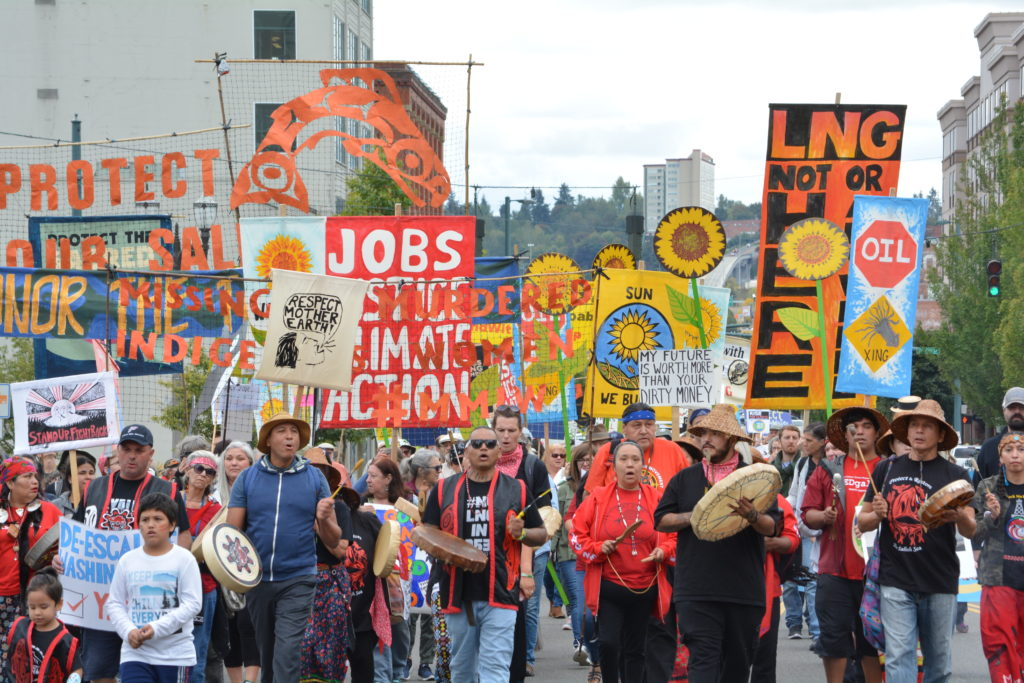
Nowadays, while you may still hear such distortions and genocide-justifying lies from right wing pundits, broader public awareness of indigenous peoples’ continued existence and ongoing defense of their lands, stewardship practices and philosophy have blossomed in fire.

Thin Green Line protestors in Tacoma, WA, source: Media Project Online

Books like Braiding Sweetgrass and The Serviceberry by indigenous scientist Robin Wall Kimmerer have been a sustained presence on the NYT Best Seller list, and the former was one of the most checked out books from the public library in 2024.

Even television shows like the FX dramedy Reservation Dogs (2021-2023), created by indigenous filmmakers Taika Waititi (Māori and European descent) and Sterlin Harjo (Seminole and Muskogee descent) has opened up a wider space in the media landscape for depictions of indigenous characters as something beyond crass stereotypes or the lie of the “Vanishing Indian.”

Reservation Dogs | Shows | CBC Gem

Reservation Dogs poster, source: FX

Films like Martin Scorsese’s Killers of the Flower Moon (2023) have brought to the mainstream moviegoing public a powerful story of what colonization really looked like, depicting indigenous Americans not as “backward savages,” but in fact the prosperous land-owning class of the Osage Nation of modern-day Oklahoma — that is, until their family members are systematically murdered to give the white settlers access to exploit that land’s rich oil reserves through marriage to an Osage woman.

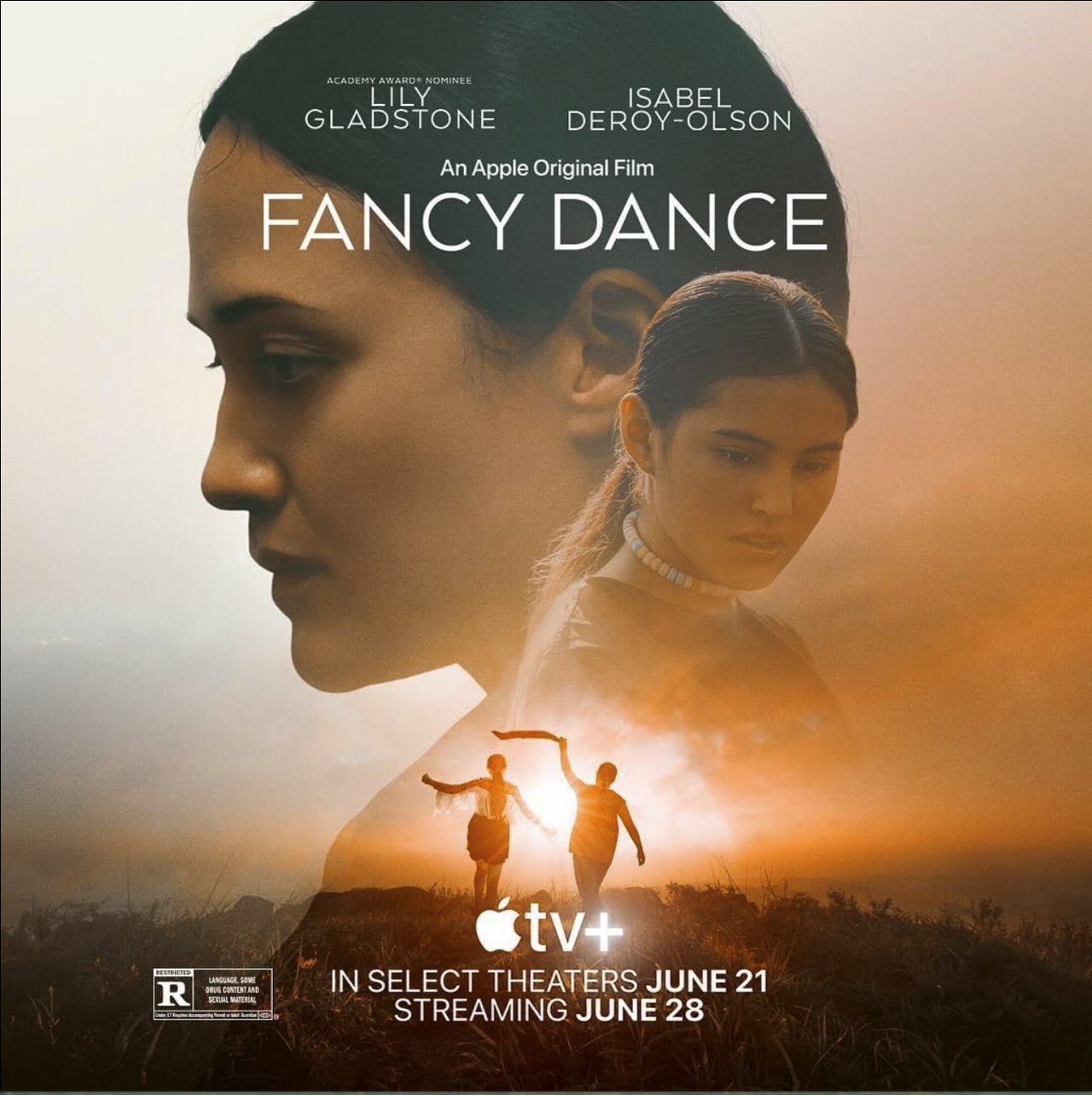
This character, Mollie Burkhart, is stunningly played by Lily Gladstone (Piegan Blackfeet, Nez Perce), for which she received an Academy Award nomination for Best Actress. Gladstone she has since used her platform to Executive Produce four films to date, centering on contemporary Native American stories of Missing and Murdered Indigenous Women (Fancy Dance), adolescence (Jazzy), confronting generational trauma of the residential school system (Sugarcane), and steps toward restoration of indigenous land and animal stewardship (Bring them Home).

The discussions of settler colonialism have gone from basically unspeakable heresy against the very soul of America to, it seems to me, pretty widely accepted in liberal to leftist circles at least (I mean John Oliver made the direct comparison of the US to Israel on a late-night comedy show). Reading Roxanne Dunbar-Ortiz’ An Indigenous Peoples History of the United States in 2024, I was struck by just how far the public sphere has shifted in narratives about indigenous people in just the 12 years since the book’s publication.

#NoDAPL

I trace a significant part of this recent shift to the 2016-2017 Standing Rock protests against the Dakota Access oil Pipeline, which made international news as indigenous water protectors and allies in solidarity occupied the historic lands of the Standing Rock Sioux Tribe for 11 months through the harsh North Dakota winter. The protests and occupations were multi-pronged, including support from 87 indigenous nations, thousands of activists, legal scholars, and organizers.

Dakota Access fires back at tribes and #NoDAPL movement ahead of ...

NoDAPL protest march in 2016, source: IndianNZ

The NoDAPL protests brought the issues of indigenous tribal sovereignty, broken treaties, and especially the indigenous conception of water and lands as sacred to the forefront of public discourse about climate change and the United States’ history of genocide.

The backlash

With each of the social revolutions I will cover in this series, I must acknowledge not just the positive steps toward shifting public consciousness, but also the reactionary backlash which inevitably follows.

This has been twofold: the State repression against activists attempting to defend water and life, and culture war against intellectuals, educators, and artists. In the former, law enforcement has deployed all manner of violent tactics (borrowed from the anti-Civil Rights police violence of the 1950s-1960s), from water cannons to chemical weapons and rubber bullets, to siccing dogs on protestors. The legal repression escalated to such a degree that those occupying the Standing Rock Sioux reservation were given prison sentences ranging from a few months, up to eight years (for single count of property damage).

Not to be deterred, #StopCopCity protestors began occupying the Weelaunee Forest in Atlanta in 2021 in the wake of Black Lives Matter Uprisings in 2020 (which I will cover in a future entry of this series), connecting struggle against anti-Black systemic racism and police with indigenous sovereignty. Again, protestors and those engaging in direct action were met with violence, most famously the murder of non-violent resister Tortuguita (whose death is still under investigation), which made international news spurred a week-long demonstration of solidarity. On the legal front, activists even in loose association have been charged with terrorism.

undefined

Tortuguita in Welaunee Forest in 2021, source: Twitter

The second prong of backlash against rising indigenous sovereignty can be seen in the response to revisionist histories like 1619 project (commemorating the 400th anniversary of the beginning of American slavery upon its publication in 2019). The same year, President Trump signed into law the 1776 Commission, intended to enforce “patriotic education” to combat to “twisted web of lies” he claimed was being taught regarding systemic racism in U.S. schools.

This, paired with the overall withdrawal of funding from US education and the ongoing dismantling of US Department of Education by Executive Order is the result of long decades of psychological warfare waged by the likes of Steven Bannon and other right-wing political actors, cataloged brilliantly (and disturbingly) in Annalee Newitz 2024 book Stories Are Weapons: Psychological Warfare and the American Mind.

Paths forward

That said, I am encouraged by Grace Lee Boggs’ words in The Next American Revolution (2012), where she analyzes how radical, beloved community has risen in Detroit in the face of monumental dis-investment and violence by the State and Capital, creating autonomous networks of care and creativity — including in education. Alternatives to “patriotic” public schooling are cropping up, like the Boggs School, founded in 2013 on the philosophy and activism of the late Grace Lee and her husband Jimmy Boggs, over their decades of organizing in the Midwest city.

These types of schools center around education as a practice of freedom, in the tradition of Paolo Freire’s work in literacy in rural Brazil, Freedom Schools of the 1960s which opened up education to Black Americans to learn about their history and spark critical consciousness to take action in their society.

Education has long been a site of struggle for Indigenous peoples everywhere, with a major tactic of colonization being the suppressed of indigenous knowledge, language, and traditions — perhaps most famously in the Residential School System, part of the “Kill the Indian, Save the Man” philosophy of forced assimilation and destruction of indigenous culture.

Promising efforts in excavating and restoring indigenous knowledge systems are blossoming all over the world, like the School of Māori and Pacific Development at the University of Waikato in Aotearoa (New Zealand), established in 1996 and becoming the Te Pua Wānanga ki te Ao, Faculty of Māori and Indigenous Studies in 2016. The emergence of these sorts of research institutions are heartening, as are the environmental remediation projects combining indigenous land stewardship and Western scientific methods.

Commencement Ceremony at the University of Waikato, source: Waikato.ac.nz

Indigenous peoples have been resisting erasure, colonization, and dispossession for hundreds of years. Now is the time of a growing movement to stand in solidarity and learn from one another if we want to make it into the next century.

Suggested Reads

#writing #revolution #NoDAPL #indigenous #landback #MMIWR #abolition #education #essay #landback #native #youareonnativeland #activism #turtleisland


#writing #organizing #revolution

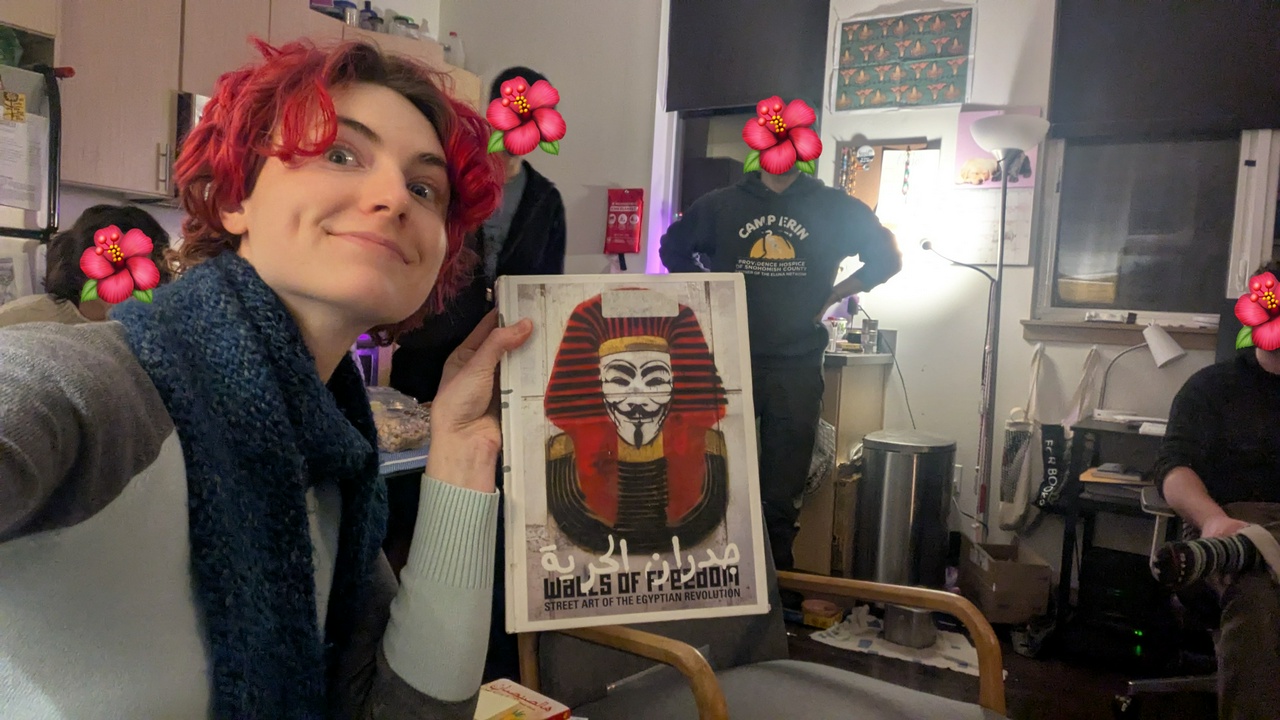
me with some rad friends

I was thinking the other day about how things can change so massively, so quickly — and how we get used to monumental changes. And even in the midst of profound backsliding and reactionary violence, I have been inspired by Rebecca Solnit’s Hope in the Dark, originally published in 2004, but with ever-renewed relevance in our oft-darkened world.

…the more profound revolutions that had unfolded in our lifetimes, around race, gender, sexuality, food, economics, and so much more, the slow incremental victories that begin in the imagination and change the rules. But seeing those revolutions requires looking for something very different than armed cadres. It also requires being able to recognize the shades of gray between black and white or maybe to see the world in full color.

-Rebecca Solnit, Hope in the Dark

In this series, I’m going to walk through what I perceive as some of the major “social revolutions” of my brief 28 years on this planet.


Pretty much all of my examples have also been followed by backlashes, but that is to be expected. Dealing with the backlash for each one will probably look different from community to community, but I think it's important to note the shifts that have taken place, because they represent spaces of possibility.

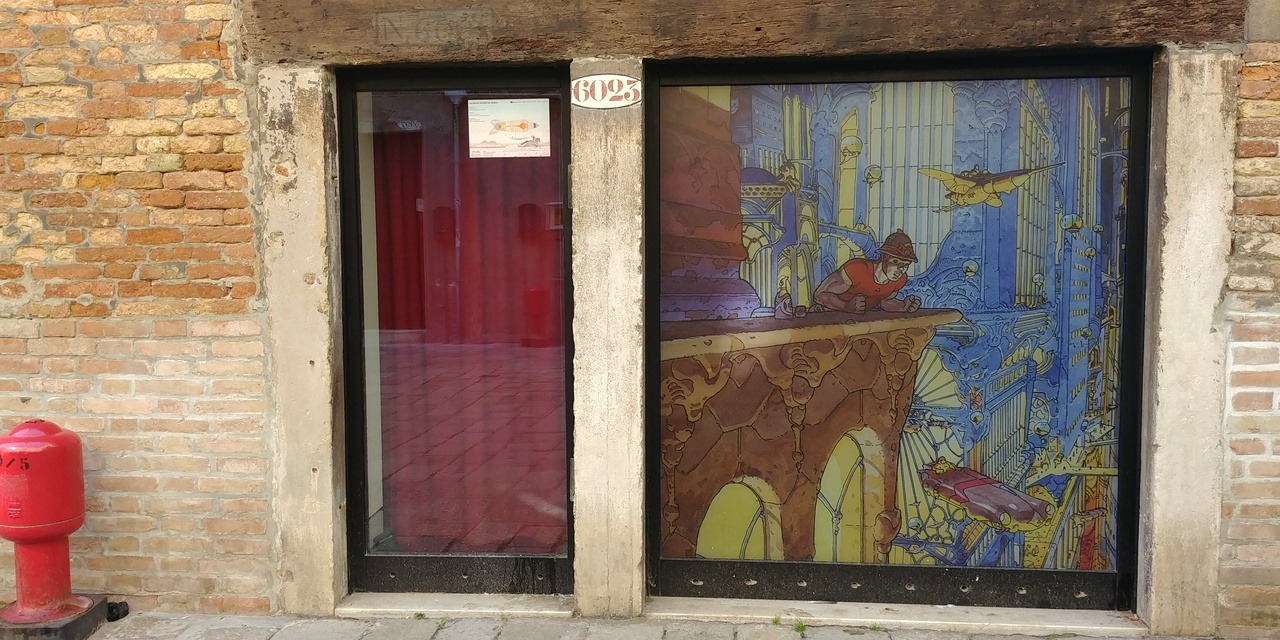
source: my photo from Venice in 2019, artwork by Mœbius

Although I don't believe in teleological views of history or a linear idea of progress — or even the arc of the universe bending one way or another — I do believe that once the genie is out of the bottle, once an idea becomes a meme, it begins to reproduce itself, and it takes deliberate and sustained effort from the ruling classes to make people forget.

This is one reason people's history, labor history, women's history, pre-colonial anthropology are so heavily suppressed.

So I take these social revolutions not as “evidence of progress” per se, but as genies the ruling classes are desperately trying to shove back in their bottles. Will they succeed? Or will we manage to keep them free?

That remains up to us.

#organizing #HowTo #reading #books #writing

So my friends are often shocked when I tell them I read somewhere in the realm of 50-100 books a year.

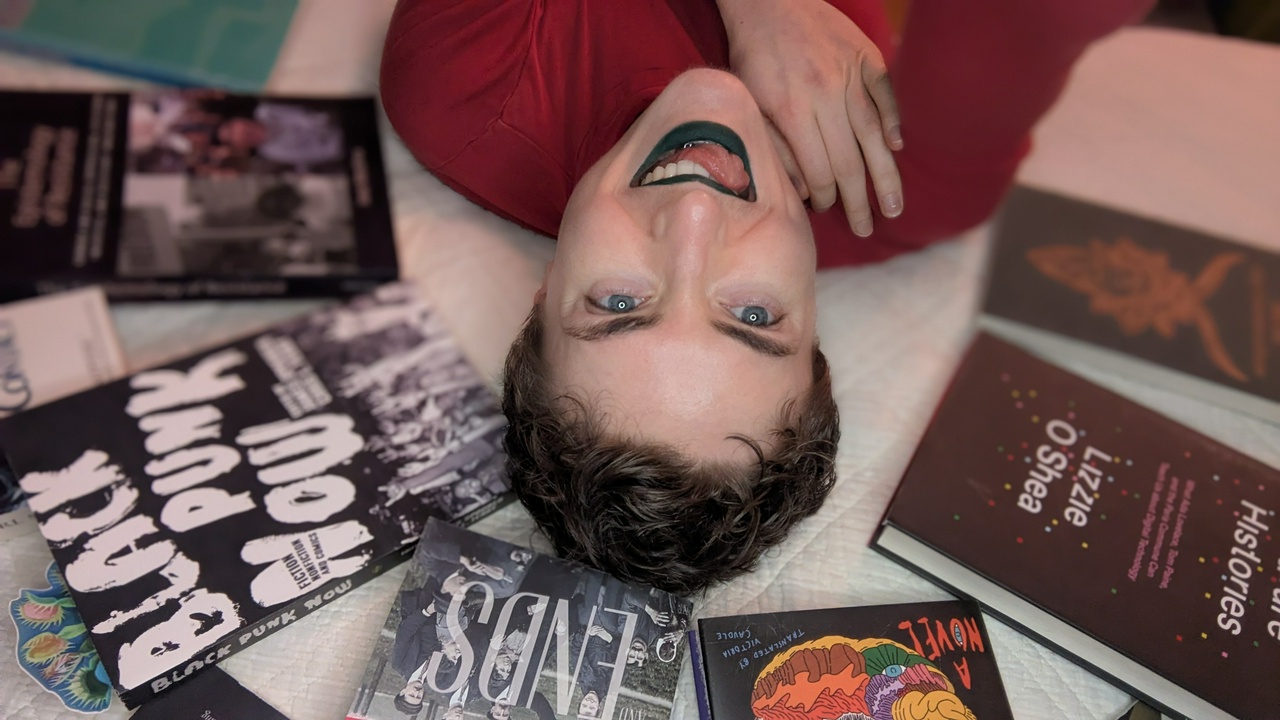
a smattering of a few books I’m currently reading

  • So how do I read so much?
  • How do I find focus in this chaotic world?

In this short guide, I will share my method for reading any text, but especially challenging ones: academic or domain-specific books and articles.

1. Have a conversation with the book.

Don't assume the author is always right: even if you find their thesis convincing, it doesn't mean all of their arguments are sound. Do you disagree with any of their assertions? Can you think of edge cases where their argument doesn't apply? Did they actually answer the question they set out to? Are they over-generalizing? Or conversely, can you take their argument further? Did they skip over something that feels important?

Who is the author asking me to identify with?

I like to annotate directly in the margins of whatever book I'm reading, either in pencil or using the comment feature of most e-readers. If something really sparks my inspiration, I'll switch to a note app to expand on my thoughts.

2. Put ideas in conversation with each other.

This is a great way of practicing ambivalent thinking. Whatever your background, you have expert knowledge in your own lived experience. You can and should use this as a way of exploring what you're reading. How does this idea apply to my own life? Do I have an experience that reinforces or challenges this idea?

As you read critically, you will gain wider background knowledge, which will unlock further understanding and engagement with what you read in the future.

A few of my idea conversation starters might be: What would Hannah Arendt think about this? Is this an example of queer use? Is this author ignoring the entirety of indigenous philosophy? Is there a dialectic somewhere in here?

3. Read multiple books in parallel.

You will naturally find ideas that play with each other even on disparate topics, helping you cultivate a richer background knowledge, in turn allowing you to understand more complex ideas and writing.

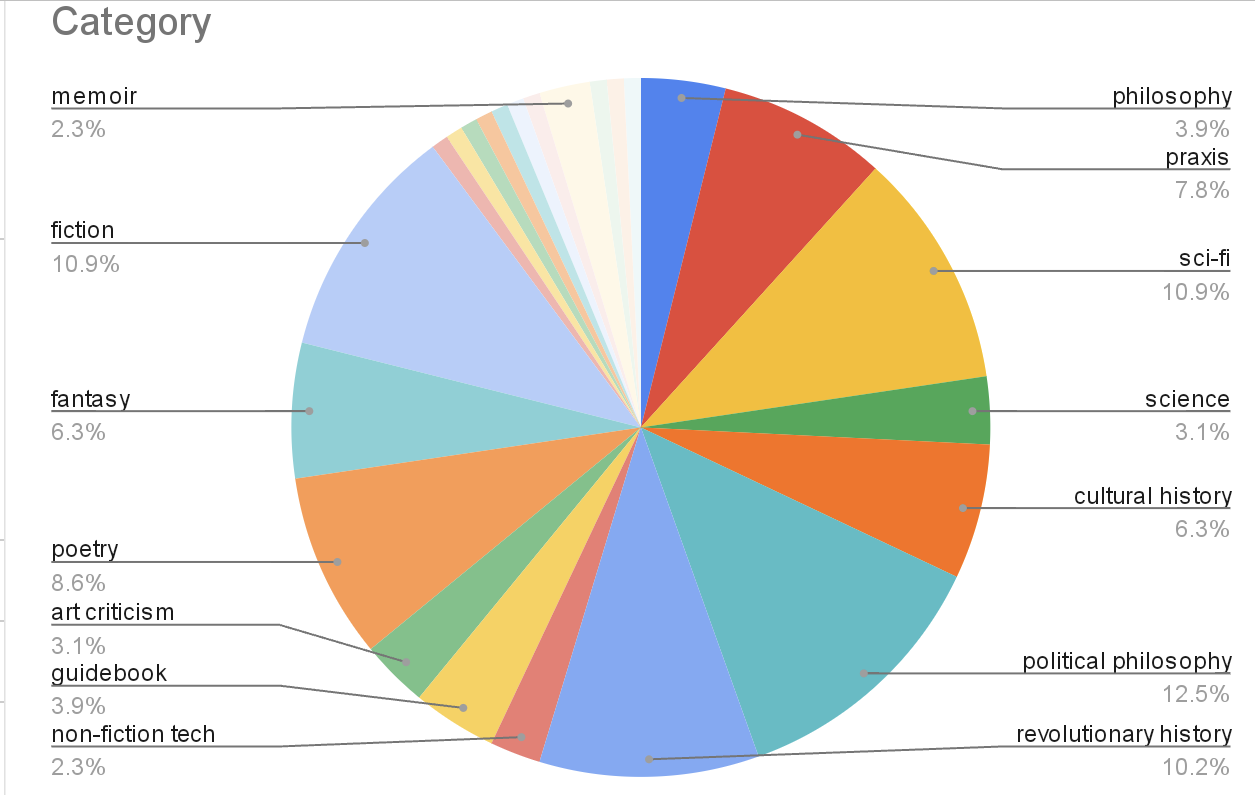
I like to read across a broad range of genres. My current pie chart looks like this:

I could write whole essays on why I think each of these are important genres, but ultimately there's a core element of personal taste here. I would humbly suggest experimenting with books outside your usual wheelhouse a couple times a year though.

I also make a strong effort to read diverse authors, namely BIPOC and ABCD (Anyone But Cis Dudes). This isn't to win diversity points or feel good about myself; genuinely the breadth and depth of marginalized knowledge blows me away over and over. These authors just frequently write more interesting, challenging philosophy than most of what gets written from a dominant position in society.

4. Consider using an external memory aid.

I use the Anki app (free on desktop and Android, paid on iOS) to create flashcards for information I know I want to remember, like new words or historical facts! The app automates spaced repetition based on memory research. I spend ~10 minutes a night “studying.” I recommend making your own cards rather than using pre-built decks (which exist on a variety of topics) largely because it forces you to be intentional about what you want to remember.